What is T2 Linux, really?
Skip the jargon. Here's the honest version of what it is, why it's special, and where it's rough — then a tour of the hardware it runs on.
Most Linux distributions are a finished meal: someone else picks the ingredients, cooks them, and hands you a plate. T2 is the kitchen.It's a system for building a complete operating system from source — and it also ships a polished, ready-to-run desktop made with that very kitchen.
It started life around 2004 as a fork of the older ROCK Linux project, and has been quietly, relentlessly developed ever since — mostly by one extraordinarily productive engineer, René Rebe, with a small and growing team. The result is something genuinely unusual: a distribution that is simultaneously bleeding-edge and able to boot on hardware the rest of the world gave up on a decade ago.
Built fresh, from source
Instead of shipping months-old packages, T2 follows the newest upstream releases and builds them for your machine. Repology independently ranks it the most up-to-date distribution there is.
Runs where nothing else will
25+ CPU architectures, from a brand-new RISC-V board to a 1990s DEC Alpha or SPARC workstation. It's part operating system, part computing-history preservation lab.
A kit, not just a distro
T2 is a distribution construction system. The same engine that builds T2 can build your distro — your packages, your architecture, your choice of C library and compiler.
Minimal-patch philosophy
It stays close to upstream and to a BSD-like 'understand it, don't paper over it' ethos — which is exactly why it ports so cleanly to so many machines.
What you can uniquely do with it
- Run a current, secure Linux on a 32-bit netbook or a vintage workstation.
- Build a purpose-made OS — a retro-gaming box, an arcade cabinet, a kiosk — with only the software it needs.
- Experiment with alternative toolchains (musl, Clang/LLVM) without fighting your distro.
- Own your entire software stack without committing to a decade of maintenance.
The honest caveats
We're fans, not a sales team — so here's the real picture:
- Updates compile from source today. A rolling
t2 up && t2 upgraderebuilds what changed, which can mean real CPU time. Binary updates are on the roadmap (René: "soon use binary updates"). - It's a smaller community. Fewer hands than Debian or Fedora — which is also exactly why helping out here goes a long way.
- It rewards curiosity.The ready-made desktop is friendly; going custom is more hands-on than clicking through an Ubuntu installer. That's the point.
Who's behind it
T2 is led by René Rebe — founder/CTO of ExactCODE, ISO PDF-standards contributor, and the host of the Code Therapy live-coding streams — together with contributors, a build automation bot affectionately called data, and a bounty program for anyone who wants to pitch in.
A working museum of computing
Remember "runs where nothing else will"? Here's what that actually means. Most distros support a handful of chips — T2 builds a current, secure Linux for 25+, spanning roughly five decades of hardware.
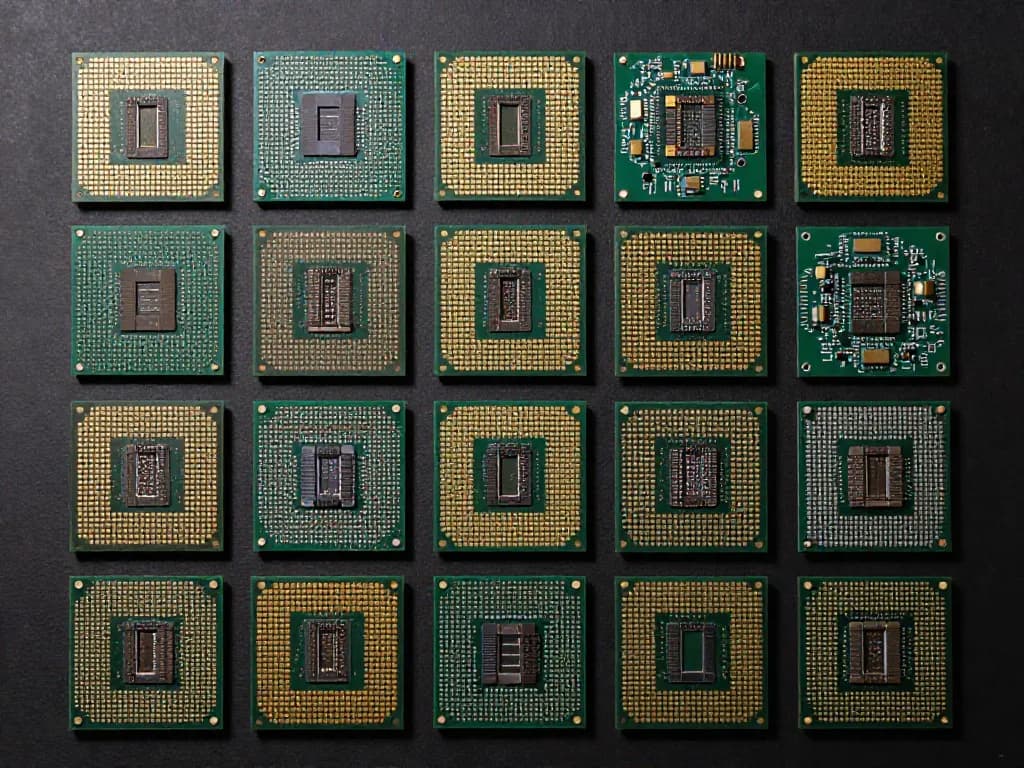
Why does this matter?
Two reasons. First, it's preservation: when the mainline Linux kernel drops an old architecture, machines don't stop existing — T2 keeps them alive and even up to date. Second, it's proof of portability: if a system builds cleanly everywhere from a mainframe to a hobbyist board, it's built right.
René, on stream:"I alone, over a decade, did more stable all-CPU-architecture support than Debian with a thousand developers."
Motorola 68000 (m68k)
1979 →vintageThe chip behind the original Macintosh, the Amiga, the Atari ST, and early Sun workstations. A whole generation of computing grew up on the 68k.
T2 ›Still a first-class target. Yes, you can build a fresh Linux for a 68k.
Intel i486 / i586 / i686
1989 →vintageThe 32-bit x86 PCs that put a computer in every home and office. Pentiums, early netbooks, the Asus Eee.
T2 ›Ships a ready i586 desktop ISO — the sweet spot for reviving old laptops.
DEC Alpha
1992 →vintageDigital's blazing 64-bit RISC chip — one of the fastest CPUs of the 1990s and an early 64-bit pioneer.
T2 ›Still built for. (René keeps the Alpha desktop limping along — LibreOffice is the holdout.)
SPARC / UltraSPARC64
1987 →vintageSun Microsystems' RISC architecture that powered a generation of Unix workstations and servers.
T2 ›SPARC64 is an actively maintained, ISO-shipping target. 'Finally get some new sun.'
MIPS / MIPS64
1985 →still aroundSGI workstations, early routers, the PlayStation and PS2, and countless embedded devices.
T2 ›Both big- and little-endian MIPS are supported.
PA-RISC (HPPA)
1986 →vintageHewlett-Packard's RISC workstations and servers — rare hardware that most distros forgot.
T2 ›Still building. T2 is, for some of these, the freshest Linux you can get.
PowerPC / POWER
1992 →still aroundFrom beige Power Macs to IBM POWER mainframes and the Wii / Wii U. A RISC line that refused to die.
T2 ›ppc, ppc64, and ppc64le all ship ISOs. René builds on an 80-thread IBM POWER8.
Itanium (IA-64)
2001 → 2021vintageIntel & HP's ambitious, ill-fated 64-bit architecture. The mainline Linux kernel dropped it — twice.
T2 ›T2 still keeps IA-64 stable and building. Vintage-hardware preservation, in practice.
x86-64 (amd64)
2003 →modernThe 64-bit PC architecture nearly every laptop and desktop runs today.
T2 ›The flagship target — including a fully musl + Clang variant for the adventurous.
ARM / ARM64 (aarch64)
1985 →modernFrom the Acorn Archimedes to the Raspberry Pi to your phone and the newest laptops — the most-shipped CPU on Earth.
T2 ›ARM and ARM64 are core targets, from tiny boards to big servers.
RISC-V (rv64)
2010 →modernThe open, royalty-free instruction set that's reshaping the future of chips — and the darling of hardware hackers.
T2 ›A showcase target. T2 demoed the world's-first AMD ROCm AI/HPC stack running on RISC-V.
LoongArch64
2021 →modernChina's home-grown 64-bit architecture — brand new, and barely supported elsewhere.
T2 ›Already a supported target. New silicon, fresh Linux, day one.
IBM Z (s390x)
1964 →still aroundThe mainframe lineage that has quietly run the world's banks for six decades.
T2 ›Yes — T2 builds for the mainframe too.
Not an exhaustive list — see the official handbook for the authoritative set of supported architectures.